

BALL MILLS
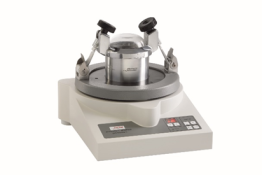
PULVERISETTE 0
Vibratory Micro Mill
The Vibratory Micro Mill PULVERISETTE 0 Batchwise fine grinding of small quantities, for fine comminution of medium-hard, brittle, moist or temperature-sensitive samples – dry or in suspension – as well as for homogenizing of emulsions and pastes. Cryogenic grinding and embrittling in the Cryo-Box for hard to mill samples. Also recommended for sample preparation of RoHS tests (Restriction of Hazardous Substances). Fine comminution, and wet and dry sieving applications in one base unit.
IDEAL FOR:
Chemical Analysis/ Environmental Research/ Pharmaceuticals/ Biotechnology/ Forensic Analysis/ Materials Technology/ ROHS
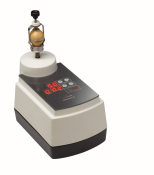
PULVERISETTE 23
Mini-Mill
The Mini-Mill PULVERISETTE 23, delivers fine comminution of smallest quantities of medium-hard, brittle and moist samples, wet, dry or cryogenic. Its special spherical grinding bowl ensures increased performance in grinding, mixing, and homogenizing. Grinding bowls, available in 15 ml, 10 ml and 5 ml for small batch sized samples. With a footprint of just 8” x 12” and a weight of 15.5lbs, it easily fits anywhere. Transportable for lab or remote operation, user-friendly, with impressive results. Small, fast, effective.
IDEAL FOR:
Chemical Analysis/ Environmental Research/ Pharmaceuticals/Medicine/ Forensic Analysis/ Biotechnology/Materials Technology/Ceramics & Glass Industry/Elemental Analysis/ Cosmetics


USA Headquarters
FRITSCH Milling and Sizing, Inc.
57 Grant Drive, Suite G
Pittsboro, NC, 27312
Phone + 1 919 229 0599
Email: info@fritsch-us.com



Send us your sample. We conduct a sample grinding and recommend the right device for your application.
FREQUENTLY ASKED QUESTIONS (FAQs)
The FRITSCH Pulverisette 0 Vibratory Micro Mill is designed for the fine grinding of medium-hard, brittle, moist, and temperature-sensitive samples, making it well suited for analytical laboratories that require controlled, reproducible sample preparation. Its vibratory grinding mechanism allows users to adjust energy input, making it particularly effective for fragile or shear-sensitive materials where excessive force could compromise sample integrity, and also has the ability for cryo milling.
Key capabilities and sample compatibility include:
- Processes a wide range of materials, including:
Plant tissues and biological samples, Soils and environmental samples,Pharmaceutical excipients and formulations, Ceramics and mineral-based materials, Electronic components for RoHS and hazardous substance analysis - Supports both dry and wet (suspension) grinding, enabling flexibility for different analytical methods. Ideal for medium-hard, brittle, and moist materials, as well as temperature-sensitive samples requiring controlled energy input
- Not suitable for very hard materials, which require higher-energy milling systems like planetary ball mills
- Adjustable grinding energy, allowing precise control to prevent over-milling or sample degradation. Particularly useful for fragile or shear-sensitive samples, where maintaining original material properties is critical for accurate analysis
- Ability to Cryo-mill in the P0
These features make the Pulverisette 0 an effective solution for chemical analysis, environmental testing, pharmaceutical research, and materials characterization.
The Pulverisette 23 Mini-Mill uses a uniquely designed spherical grinding bowl, which improves grinding efficiency and sample uniformity compared to traditional cylindrical designs. This geometry ensures that grinding energy is distributed evenly throughout the sample, eliminating inefficient zones and enhancing overall comminution performance, particularly important for laboratories working with very small sample volumes.
Why does spherical geometry outperform cylindrical bowls?
- Cylindrical bowls create dead zones at flat bottom edges where grinding balls settle, wasting impact energy and leaving material unprocessed. The curved spherical walls continuously redirect grinding balls through the full sample volume at all oscillation angles, eliminating dead zones entirely. Impact and friction are applied uniformly throughout the sample mass, producing a tighter and more homogeneous final particle size distribution
Technical Specifications
- Operates at 900–3,000 oscillations per minute at a fixed 9 mm amplitude. Processes small sample volumes between 0.1 ml and 5 ml down to reproducible sub-micron to micron-range particle sizes. Supports both impact and friction-based grinding mechanisms throughout the entire bowl
- Cryo milling
- Milling in microtubes
Ideal for:
- Pharmaceutical researchers requiring consistent particle size for formulation work. Materials scientists working with small or precious sample quantities. Forensic analysts who depend on reproducible, high-resolution particle size results
The Pulverisette 23’s patented spherical bowl geometry is the defining advantage that sets it apart, delivering uniform comminution, zero dead zones, and reproducible results that cylindrical bowl designs simply cannot match.
Yes, both the FRITSCH Pulverisette 0 Vibratory Micro Mill and Pulverisette 23 Mini-Mill support cryogenic grinding, enabling efficient size reduction of materials that are soft, elastic, fatty, moist, or thermally sensitive at room temperature. By cooling samples with liquid nitrogen, materials become brittle, allowing effective comminution without smearing, agglomeration, or chemical degradation—critical for maintaining sample integrity in analytical and research applications.
Cryogenic workflows by instrument
- Pulverisette 0- uses a dedicated cryo-box accessory: the filled grinding set is placed inside an insulated box and submerged in liquid nitrogen to embrittle the sample before and during milling; the enclosure is engineered to minimize liquid nitrogen evaporation
- Pulverisette 23- supports pre-cooling of specific compatible grinding sets prior to milling
When cryogenic grinding is required
- Polymers, elastomers, and biological tissues that become soft or sticky at room temperature, and resist conventional milling. Pharmaceutical compounds and excipients where heat-induced phase or chemical changes would compromise analytical results. Natural waxes, resins, and fatty materials in green chemistry applications.
- Prevents thermal degradation, preserving chemical composition and phase structure. Reduces smearing and agglomeration, improving particle size reduction and uniformity. Supports both dry and specialized workflows, depending on material behavior.
Common applications include:
- Pharmaceutical API processing and excipient analysis. Biotechnology workflows, such as cryogenic cell disruption. Polymer and composite material analysis. Battery and energy materials research, green chemistry applications involving temperature-sensitive materials, biological samples (biopsies; organs,…)
With cryogenic capability across both instruments, the Pulverisette 0 and Pulverisette 23 offer a reliable solution for laboratories where sample integrity and chemical preservation are non-negotiable throughout the grinding process.
Grinding set material selection is one of the most consequential decisions for analytical accuracy, abrasive wear during milling introduces trace contaminants into the sample, making the right choice essential for reliable results.
Available materials by instrument
- Pulverisette 23- stainless steel, and zirconium oxide
- Pulverisette 0-agate, sintered corundum, Zirconium oxide, stainless steel, and tungsten carbide
Material selection by application
- Zirconium oxide, recommended when zero metallic contamination is required, such as elemental analysis, battery research (lithium-ion cathode materials), and biomedical applications and cryogenic milling. Agate or zirconium oxide, preferred for environmental and pharmaceutical analyses where trace metal background must be kept minimal. Stainless steel, generally acceptable for RoHS sample preparation and heavy metal screening in electronic components.
Critical usage rules
- Always pair bowls and balls of the same material, mixing materials causes differential wear and cross-contamination. For exotic alloys, ceramics, or aerospace and defense materials testing, contact the FRITSCH application team to confirm material compatibility before proceeding.
Selecting the correct grinding set material from the outset protects sample integrity, safeguards analytical accuracy, and ensures your results remain free from process-introduced contamination.
The Pulverisette 0 Vibratory Micro Mill and Pulverisette 23 Mini-Mill serve different but complementary roles within the ball mills category. The best choice depends on your sample size, workflow needs, and application requirements. While both systems are designed for fine grinding of small samples, they differ in functionality, flexibility, and suitability for specialized environments.
Pulverisette 0- key strengths
- Electromagnetically driven mortar-and-ball system with adjustable vertical oscillations amplitude (1–3 mm) at 3,000–3,600 oscillations per minute
- Converts to a vibratory sieve shaker, enabling combined grinding and particle size fractionation in a single instrument. Best suited for labs requiring both comminution and sieving analysis from one platform
Pulverisette 23- key strengths
- Wider frequency range (900–3,000 oscillations per minute, regulated 15–50 Hz) with a fixed 9 mm amplitude and sample volumes up to 15 ml in spherical grinding bowls.Generally the more capable platform for the smallest sample volumes (0.1–5 ml) with tight reproducibility requirements.
- Glovebox-ready with remote control and USB-C connectivity, the stronger choice for inert-atmosphere work involving air-sensitive battery materials, radioactive or pharmacologically active substances, and oxygen-sensitive mechanochemistry.
How to choose
- Choose the Pulverisette 0 if you need dual grinding and sieving functionality in one instrument.
- Choose the Pulverisette 23 if you require inert-atmosphere milling, sub-5 ml sample precision, or glovebox integration.
Both instruments are purpose-built for micro-scale milling, but their distinct feature sets mean the best choice is the one matched to your lab’s specific analytical workflow, contact the FRITSCH team for a tailored recommendation.
Yes, the FRITSCH Pulverisette 23 Mini-Mill is well-suited for small-scale mechanochemical synthesis, particularly in green chemistry workflows that aim to reduce or eliminate solvent use. By delivering controlled mechanical energy, the mill enables solid-state reactions such as co-crystal formation and ligand exchange, making it a practical tool for research and method development in sustainable chemistry.
Key considerations and capabilities include:
- Supports mechanochemical reactions, including: solid-state synthesis, co-crystal formation, ligand exchange and activation processes.
- Green chemistry advantages: enables solvent-free or low-solvent reactions, reduces chemical waste and energy consumption
- With translucid bowl, enable in situ measurements
- Glovebox-ready version supports inert-atmosphere workflows for air- or moisture-sensitive reagents where reaction fidelity depends on environmental control.
Ideal application areas:
- Solvent-free organic synthesis and pharmaceutical co-crystal screening, inorganic and coordination chemistry involving ligand exchange under inert atmosphere. Green chemistry R&D where reducing solvent consumption and energy input are primary objectives.
For laboratories exploring sustainable synthesis pathways, the Pulverisette 23 offers a precise, controllable platform for mechanochemical R&D, provided workflows are designed within its batch-scale volume and material compatibility parameters.
XRF and XRD results are highly sensitive to particle size distribution and sample homogeneity. Coarse or inconsistent grinding produces matrix heterogeneity that introduces systematic errors in both fluorescence intensity and diffraction peak resolution.
- The Pulverisette 23 achieves a final fineness down to 5 µm , meeting or exceeding the particle size requirements for high-quality pressed pellets and fused beads used in XRF. Its spherical grinding bowl geometry, unique to Fritsch, produces a significantly improved grinding effect compared to conventional cylindrical bowl designs , resulting in tighter, more reproducible particle size distributions across every batch.
- Grinding time is precisely adjustable and fully configurable,allowing labs to lock in a reproducible prep protocol that eliminates operator-to-operator variability. The result is a homogeneous compact or pellet with uniform density and consistent matrix presentation, the foundation of accurate, defensible XRF and XRD data. IQ/OQ documentation is available, supporting full instrument qualification within ISO and GMP quality management systems
When particle size and homogeneity determine the quality of your XRF and XRD data, the Pulverisette 23 delivers the fineness, consistency, and protocol control needed to make sample preparation the least uncertain step in your analysis.
Contamination introduced during sample prep is one of the most common, and most underestimated sources of error in trace elemental analysis. The bowl material you grind in becomes part of your sample matrix.
- The Pulverisette 23 is available with grinding bowls and balls in four different materials, including zirconium oxide (ZrO₂) for absolute metal-free grinding , hardened stainless steel, and PTFE for chemically inert, low-background applications
- The spherical bowl design ensures much easier recovery and simpler cleaning between samples, reducing carryover risk and minimizing the time burden of decontamination protocols
- The mill supports grinding in a controlled, oxygen- and moisture-free atmosphere , and is suitable for handling toxic or hazardous substances, including work in isolator environments for biohazardous, radioactive, or pharmacologically active materials
- For biotechnology applications, the 5 and 32 ml PTFE grinding bowl allows disruption of frozen tissue and cells within minutes, with the option to pre-cool the entire bowl in liquid nitrogen for cryogenic grinding
- The ability to select bowl material based on analyte chemistry means you match the tool to the technique, not the other way around
The Pulverisette 23’s material options, spherical bowl design, and controlled-atmosphere capability make it a rare micro-mill that can be genuinely configured for contamination-sensitive workflows.
FTIR by transmission requires an exceptionally fine, dry, homogeneously dispersed powder mixed with KBr, typically ground to below 2 µm to avoid light scattering artifacts that distort band shapes and reduce sensitivity.
- The Pulverisette 23 enables suitable preparation of homogeneous potassium bromide (KBr) pellets for fiber and material analysis by infrared spectroscopy, one of its specifically documented analytical applications
- The mill handles wet grinding as well as dry and cryogenic grinding, giving FTIR users flexibility for moisture-sensitive compounds or materials that become plastic or gummy at ambient temperature
- The quick-clamping, twist-and-turn bowl closure makes rapid bowl swaps practical, reducing prep time per sample and supporting high-throughput batching
- Oscillation speed is adjustable from 900 to 3,000 oscillations per minute at 9 mm amplitude , allowing fine-tuning for soft organic matrices versus harder inorganic materials without over-grinding and no temperature increase
- The small working volumes (0.5–5 ml) are perfectly suited for precious or limited materials, pharmaceutical actives, reference standards, forensic samples, where sample loss is not an option
For FTIR workflows where pellet quality directly determines spectral integrity, the Pulverisette 23 offers the fineness, flexibility, and volume control needed to take KBr preparation from a bottleneck to a repeatable, reliable step.
Electron microscopy demands materials that are morphologically representative, free of prep-induced artifacts, and available in quantities small enough to handle safely, often from a larger, heterogeneous bulk sample.
- The Pulverisette 23 achieves fine comminution of smallest quantities, working volumes as low as 0.5 ml, making it ideal for precious, limited, or hazardous materials that cannot be wasted in large-scale prep
- Documented applications include ceramic analysis, polymer characterization, and catalytic material synthesis, all materials routinely examined by SEM/TEM, confirming the mill’s compatibility with the particle size ranges used in electron microscopy workflows
- The mill’s closed grinding bowl system supports controlled-atmosphere grinding , preventing oxidation or hydration of air-sensitive materials that would compromise surface chemistry and morphology under the electron beam
- With a footprint of just 20 × 30 cm and a weight of 7 kg , the Pulverisette 23 sits comfortably on any prep bench, including cleanroom and fume hood environments, without displacing critical workspace
- A single instrument serves XRF, FTIR, XRD, ICP-MS, and SEM/TEM prep workflows, eliminating the cost, variability, and maintenance burden of multiple single-purpose tools
From micro-volume comminution to controlled-atmosphere grinding and multi-technique compatibility, the Pulverisette 23 consolidates what would otherwise require several instruments into one compact, analytically versatile platform.
Still Have Questions? We're Here to Help
If you didn’t find the information you were looking for in the FAQs above, feel free to reach out. Our team is happy to assist with any additional questions you may have about our products, services, or technical details.
Simply submit your question through the form below and a member of our team will review your inquiry and get back to you as soon as possible. We aim to provide clear, accurate answers to help you find the right solution.
Your question may also help other customers in the future—common inquiries are often added to our FAQ section to make helpful information easier to find.
You can also browse our General FAQ page, where we’ve compiled answers to broader and commonly asked questions.
FREE SAMPLE SUBMISSION AND APPLICATION REVIEW
Send us a sample submission to find the perfect instrument configuration for your application.