

PLANETARY BALL MILLS
FRITSCH Planetary Ball Mills – high-performance all-rounder in routine laboratory work.
HIGH-SPEED AND VERSATILE
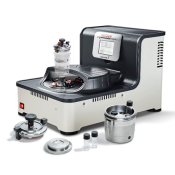
PULVERISETTE 7
premium line
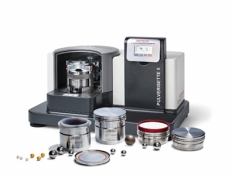
PULVERISETTE 5
premium line
The Planetary Mill, PULVERISETTE 5 premium line, quickly processes higher volumes of materials down into the nano range. With 2 grinding stations, it is the ideal mill for wet and dry grinding of hard, medium-hard, soft, brittle and moist samples as well as for mechanical alloying, mixing and homogenizing with reliable results. Various applications can be referenced for solid state chemistry, mechanical alloying, formulations, screening, oxides, catalysts, additives & more. Depending on the desired final fineness, the grinding can be performed dry, in suspension or in inert gas. In addition to comminution, you can also use Planetary Mills for mixing and homogenizing emulsions and pastes or for mechanical activation and alloying in materials research. With speeds up to 2200 RPM, and secure automatic clamping system for the grinding bowls, the capabilities are endless.
IDEAL FOR:
Biology / Chemistry / Ceramics / Geology and Mineralogy / Metallurgy / Material Research / Mechanical Alloying / Nanotechnology / Pharmaceuticals /
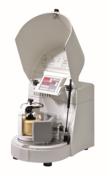
PULVERISETTE 6
classic line
The Planetary Mono Mill, PULVERISETTE 6 classic line, operates with a single grinding station and an extensive range of sample volumes. Easy use and high-energy speed of up to 650 rpm ensures high grinding performance with consistent results. Save valuable bench space while increasing capabilities for loss-free grinding results in the comminution of hard, medium-hard, brittle and moist materials, dry in suspension or in inert gas. Perform applications such as analytical sample preparation, mechanical alloying or for mixing and homogenizing of emulsions and pastes.
IDEAL FOR:
Biology / Chemistry / Ceramics / Geology and Mineralogy / Metallurgy / Material Technology / Pharmaceuticals / Sample Preparation for Analysis
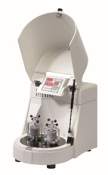
PULVERISETTE 7
classic line
The PULVERISETTE 7 classic line mill for small sample volumes at acceleration forces of 50 x g across 2 working stations. This benchtop mill is ideally suited for fast, uniform, and extremely fine comminution of hard, medium-hard, brittle and moist samples. Depending on the desired final fineness the grinding can be performed dry or in suspension. For many applications like comminution, analytical sample preparation, or mixing and homogenizing of emulsions and pastes, and materials science.
IDEAL FOR:
Biology / Chemistry / Ceramics / Geology and Mineralogy / Metallurgy / Material Technology / Pharmaceuticals / Sample Preparation for Analysis
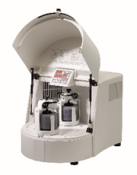
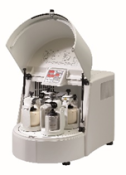
PULVERISETTE 5-2 and 5-4
classic line
The Planetary Mill PULVERISETTE 5 classic line is available with two working stations or four working stations for high throughput processing. Delivers fast and reliable loss-free grinding results of hard, medium-hard, soft, brittle, tough and moist materials down to colloidal fineness. Depending on desired final fineness, grinding is possible to be performed dry, in suspension, or in inert gas. For many applications like comminution, mixing and homogenizing of emulsions and pastes, or for mechanical activation and alloying in material research.
IDEAL FOR:
Analysis Preparation / Biology / Chemistry / Ceramics / Geology and Mineralogy / Metallurgy / Material Technology / Pharmaceuticals


USA Headquarters
FRITSCH Milling and Sizing, Inc.
57 Grant Drive, Suite G
Pittsboro, NC, 27312
Phone + 1 919 229 0599
Email: info@fritsch-us.com



Send us your sample. We conduct a sample grinding and recommend the right device for your application.
FREQUENTLY ASKED QUESTIONS (FAQs)
Planetary ball mills are widely used in advanced laboratory environments for high-energy milling, particle size reduction, green chemistry and mechanochemical synthesis. In materials science, chemistry, and engineering labs, these systems enable researchers to perform controlled solid-state reactions, prepare precursor powders, and investigate new materials with high reproducibility. Instruments such as the Pulverisette 7 premium line (P-7pl) and Pulverisette 5 premium line (P-5pl) generate strong centrifugal forces and Coriolis effect that allow rapid comminution into the submicron or nanometer range, depending on the material and milling parameters.
Key research uses and capabilities of planetary ball mills include:
- High-energy size reduction for brittle, hard, or composite materials
- Mechanical alloying for producing novel metallic or ceramic material systems
- Solid-state synthesis and mechanochemistry for solvent-free chemical reactions
- Green chemistry workflows, reducing or eliminating solvent use in synthesis and less energy-consuming technology
- Battery material development, including cathode, anode, and solid electrolyte powders
- Precursor preparation for spark plasma sintering (SPS) and advanced ceramic processing
- Inducing phase transformations and creating metastable or nanostructured materials
- Precise control of experimental conditions through adjustable rotational speed, grinding time, and ball-to-powder ratios
- Reproducible research protocols in regulated or high-precision laboratory environments
- Microelectronics : developing new materials and for example make computing faster, more efficient, and more powerful
These capabilities make planetary ball mills essential tools across pharmaceutical development, defense research, energy engineering, electronics, automotive materials, battery technology, additives manufacturing, aerospace, green chemistry or advanced ceramics programs.
In short, planetary ball mills provide researchers with a very high-energy, precisely controlled platform for particle engineering and mechanochemical synthesis, making them a foundational technology in modern advanced materials research.
Read More About:
Micromilling of uniform nanoparticles for space applications
The Pulverisette 7 premium line (P-7pl) and Pulverisette 5 premium line (P-5pl) are both high-performance planetary ball mills designed for advanced research and materials processing. The key difference between the two systems is scale versus energy intensity. The P7 is optimized for maximum impact energy and nanomaterial research in small batches, while the P5 is designed for larger batch volumes and higher throughput in pilot-scale or pre-production environments.
Key distinctions between the two planetary ball mills include:
Pulverisette 7 premium line (P-7pl) – optimized for ultra-high energy milling and nanoscale research:
- Designed for small batch, high-energy laboratory milling
- Capable of achieving extremely fine particle sizes (<50 nm) depending on the material and parameters
- Maximum rotational speeds of 1100 rpm on the sun disk and 2200 rpm on the planet disk
- Generates acceleration forces up to 95 × g
- Ideal for nanomaterial synthesis, mechanochemical reactions, and mechanical activation
- Commonly used in advanced materials research, pharmaceuticals, battery materials, and catalysis
Pulverisette 5 premium line (P-5pl) – optimized for throughput and scalability:
- Designed for larger grinding bowl volumes and higher sample throughput
- Maximum rotational speeds of 800 rpm on the sun disk and 1600 rpm on the planet disk
- Generates acceleration forces up to 64 × g
- Suitable for mechanical alloying, larger batch powder processing, and pilot-scale preparation
- Frequently used for precursor preparation before spark plasma sintering, additive manufacturing, and powder metallurgy
In practice, the choice between these planetary ball mills depends on whether a laboratory prioritizes maximum milling energy for nanoscale research (P-7) or larger batch capacity and scalable materials processing (P-5).
More Information:
Planetary ball mills are capable of producing extremely fine powders ranging from the micron scale down to the nanometer range, depending on the material and milling conditions. Under optimized laboratory conditions, very high-energy systems such as the Pulverisette 7 premium line can achieve particle sizes below 0.05 µm (sub-100 nm). However, the final particle size is not determined by the mill alone—milling parameters, material characteristics, and process controls all play an important role in the achievable fineness and reproducibility of results.
Key factors that influence the final particle size during planetary ball milling include:
- Rotational speed and centrifugal acceleration, which determine the energy transferred to the particles
- Grinding media size and material, affecting impact force and frictional grinding efficiency
- Ball-to-powder ratio, which influences collision frequency and energy transfer
- Material properties, including hardness, brittleness, and ductility
- Milling time and total energy input, which determine the degree of comminution and mechanical activation
- Wet vs. dry milling, where milling in suspension can help produce finer and more uniform particle distributions
- Process control agents (PCAs) such as stearic acid or methanol, which reduce cold welding and agglomeration in ductile materials
- Temperature management and pause cycles, often used in battery, aerospace, and pharmaceutical research to avoid unwanted phase changes
- Milling atmosphere, which can affect oxidation, contamination, or chemical reactions during grinding
Brittle materials like ceramics, oxides, and minerals typically grind more rapidly, while ductile metals or polymers may require additional process control to prevent agglomeration during milling.
In practice, achieving ultrafine or nanoscale particle sizes with planetary ball mills requires careful optimization of milling parameters, ensuring consistent and reproducible results across research and development (R&D), quality control (QC), quality assurance (QA), and advanced materials development laboratories.
Yes, planetary ball mills are highly effective tools for mechanochemistry and solvent-free green chemistry, enabling chemical reactions to occur through mechanical energy rather than conventional thermal or solvent-based processes. By generating intense impact and friction forces within the grinding bowl, these mills create localized pressure and transient temperature conditions that can initiate solid-state reactions, co-crystal formation, and chemical bond transformations. This approach allows researchers to significantly reduce solvent use while accelerating reaction kinetics and improving process sustainability.
Key advantages of planetary ball mills for mechanochemical and green chemistry research include:
- Solvent-free or low-solvent reaction pathways, supporting green chemistry and sustainable synthesis
- High-energy impact and friction forces that drive solid-state reactions and molecular transformations
- Support for mechanochemical processes, including co-crystal formation, polymorph screening, and covalent bond formation
- Controlled milling parameters, allowing researchers to flexibly adjust rotational speed, milling time, and energy input to influence reaction kinetics
- Inert gas milling capability, essential for oxygen- or moisture-sensitive reagents such as metal hydrides, reactive organics, and alkaline earth compounds
- Multi-vessel configurations that enable experimental design studies and high-throughput reaction screening
- Integrated gas pressure and temperature monitoring (GTM) for real-time reaction tracking and process insight
- Mill Control Software integration, allowing standardized operating procedures (SOPs) and repeatable experimental protocols
- Improved laboratory safety, as reactions occur in contained grinding bowls with reduced solvent handling
These capabilities make planetary ball mills particularly valuable for eco-chemistry research, pharmaceutical development, mechanochemical synthesis studies, and solvent-free reaction pathway exploration.
Overall, planetary ball mills provide researchers with a precisely controlled, energy-efficient platform for mechanochemistry and green synthesis, enabling sustainable chemical innovation while maintaining reproducible and well-documented experimental conditions.
Yes, planetary ball mills are widely used for mechanical alloying and advanced metal powder development because they generate the high-energy impacts needed to repeatedly fracture and cold weld metallic particles. This milling process promotes solid-state diffusion and alloy formation, enabling materials scientists to combine metals that are difficult or impossible to alloy using conventional melting techniques. As a result, planetary milling has become a core method in modern powder metallurgy, nanostructured alloy development, and advanced materials engineering.
Key ways planetary ball mills support mechanical alloying and metal powder research include:
- High-energy impact forces that repeatedly fracture and cold weld metal particles
- Solid-state diffusion processes that enable alloy formation without melting
- Development of refractory metal systems that are difficult to process using conventional metallurgy
- Production of high-entropy alloys (HEAs) and complex multi-component material systems
- Fabrication of oxide dispersion strengthened (ODS) steels for high-temperature structural applications
- Creation of intermetallic compounds and metastable phases through controlled mechanical activation
- Support for nanostructured alloy development used in aerospace, defense, and energy systems
- Precise control of milling parameters, including rotational speed, milling time, and ball-to-powder ratio
- Inert gas milling environments that help prevent oxidation during alloy formation
- Flexibility in scale, where Pulverisette 5 premium line (P-5pl) supports larger batch mechanical alloying and Pulverisette 7 premium line (P-7pl) provides extremely high energy density for small-sample research
These capabilities make planetary ball mills valuable tools across Department of Defense (DoD), Department of Energy (DoE), NASA research programs, aerospace engineering, automotive materials development, and advanced metallurgy laboratories.
In summary, planetary ball mills provide the high-energy mechanical environment required for advanced alloy synthesis and metal powder engineering, supporting next-generation materials development across scientific and industrial research sectors.
Selecting the right planetary ball mill requires careful evaluation of sample volume, batch size, and expected throughput. Laboratories must consider how much material will be processed per run, the desired particle size reduction, and how frequently the mill will be used. Systems such as the Pulverisette 7 premium line (P-7pl) and Pulverisette 5 premium line (P-5pl) are designed for different scales of operation, allowing research teams to match milling energy and capacity to their experimental workflow.
Important factors to evaluate when selecting a planetary ball mill include:
- Sample volume per batch, which determines the appropriate grinding bowl capacity
- Desired energy input per gram, particularly important for nanoscale research and mechanochemical reactions
- Starting particle size, which influences milling time and grinding media selection
- Grinding bowl size and number of stations, affecting how much material can be processed simultaneously
- Run time and cooling intervals, especially during high-energy milling cycles that generate heat
- Total weekly throughput, including the number of experiments or batches expected per week
- Material value and availability, where smaller systems are often preferred for limited or high-value samples
- Application requirements, such as preparing powders for battery materials, spark plasma sintering (SPS), additive manufacturing, or powder metallurgy
- Scalability of research, particularly when transitioning from laboratory experiments to pilot-scale material preparation
In practice, the Pulverisette 7 premium line (P-7pl) is typically selected for small-batch, high-energy applications, while the Pulverisette 5 premium line (P-5pl) supports larger batch volumes and pilot-scale throughput.
Ultimately, choosing the right planetary ball mill ensures that laboratories can maintain efficient workflows, achieve consistent particle size results, and scale research processes effectively as material development progresses.
More Information:
Planetary ball mills are powerful tools for high-energy milling and mechanochemical processing, but like any laboratory technology they have practical limitations that researchers must consider when designing experiments. Factors such as sample capacity, heat generation, material compatibility, and scale-up constraints can influence both milling performance and experimental reproducibility. Understanding these considerations helps laboratories optimize milling parameters while protecting sample integrity.
Key technical limitations and considerations include:
- Limited batch capacity, as planetary ball mills are typically designed for laboratory-scale research rather than high-volume industrial processing
- Heat generation during high-energy milling, which can affect temperature-sensitive materials if not controlled but which is monitored
- Thermal management requirements, often addressed through interval milling, pause cycles, or programmable mill control settings
- Potential contamination from grinding bowls or media, especially important in pharmaceutical, semiconductor, and trace analysis research
- Material compatibility considerations, where bowl and media materials must match the purity requirements of the sample
- Selection of appropriate grinding materials, such as Si₃N₄ (silicon nitride) for ultra-trace purity applications or ZrO₂ (zirconia) for electrochemical and battery research
- Cold welding challenges with ductile materials, including metals or polymers, which may require process control agents (PCAs)
- Baseline contamination testing, commonly performed through blank milling runs before analytical experiments
- Scale-up limitations, as energy density and motion dynamics differ between laboratory planetary mills and industrial milling systems
When these factors are properly managed, planetary ball mills remain highly effective for materials science, mechanochemistry, pharmaceutical research, and advanced powder engineering.
By understanding the operational limitations of planetary ball milling, researchers can design more reliable experiments, control contamination risks, and maintain consistent material properties across research and development workflows.
Yes, FRITSCH planetary ball mills are commonly used to prepare powder feedstocks for spark plasma sintering (SPS) because they can precisely control particle size, mixing uniformity, and surface activation. Pre-SPS milling improves the physical and microstructural properties of powders, which directly influences densification behavior, grain structure, and final mechanical performance during the SPS process. High-energy planetary milling helps researchers create powders that sinter more efficiently under pulsed electric current and pressure.
Key ways planetary ball mills support SPS powder preparation include:
- Particle size reduction, producing finer powders that densify more rapidly during SPS
- Increased particle surface area, improving contact between particles and promoting faster sintering
- Mechanical activation of powders, creating grain boundary defects that lower sintering activation energy
- Homogeneous mixing of multi-phase systems, ensuring consistent composition in composite or cermet materials
- Support for oxidation-sensitive materials, including carbides, borides, nitrides, and metal powders
- Inert gas milling capability, preventing surface oxidation in materials such as TiC, TiCN, Ni, Co, and Mo
- Ultrafine powder preparation, where systems like the Pulverisette 7 premium line (P-7pl) can reach sub-100 nm particle sizes for nanostructured SPS materials
- Multi-bowl milling configurations, allowing researchers to prepare multiple powder batches under identical conditions
- High reproducibility between powder lots, which is critical for controlled SPS experiments and comparative studies
These capabilities make planetary ball mills valuable tools in ceramics research, cermet development, aerospace materials engineering, and advanced powder metallurgy programs.
In summary, FRITSCH planetary ball mills provide a reliable and controllable method for preparing high-quality SPS powder feedstocks, helping researchers achieve consistent densification and optimized microstructures in spark plasma sintering applications.
Read More About:
Micromilling of uniform nanoparticles for space applications
Selecting the correct grinding bowl and media material is critical when using planetary ball mills for battery materials research, as even trace contamination can affect electrochemical performance and experimental reproducibility. During milling, small amounts of wear from the bowl or grinding media can enter the powder. For lithium-ion and solid-state battery development—such as NMC, LFP, NCA cathodes, anode materials, and solid electrolytes—researchers typically select bowl materials that minimize unwanted elemental contamination while still delivering sufficient grinding energy.
Key considerations for bowl material selection in battery research include:
- Zirconium oxide (ZrO₂) bowls and balls are commonly the preferred option for battery materials
- Electrochemically inert with minimal ionic contamination
- High hardness (~1200 HV10) suitable for most battery powders
- Capable of achieving very fine particle sizes (approaching <50 nm under optimized conditions)
- Silicon nitride (Si₃N₄) bowls are used when ultra-trace purity is required and zirconium contamination must be avoided
- Tungsten carbide (WC) bowls provide extremely high hardness but contain a cobalt binder, which may be incompatible with some battery chemistries unless cobalt is already part of the formulation
- Hardened stainless steel bowls introduce iron and chromium, which may be useful for catalytic applications but are often avoided in electrochemical materials research
- Agate (SiO₂) bowls are commonly selected for organic mechanochemistry or silica-tolerant materials
Additional best practices for contamination control include:
- Using wet milling with compatible solvents to reduce abrasion and agglomeration
- Performing blank milling tests to establish baseline contamination levels
- Conducting post-milling elemental analysis (e.g., ICP-OES) to quantify trace contamination
By carefully selecting bowl materials and implementing contamination monitoring protocols, laboratories can maintain high-purity powder preparation for advanced battery materials research and electrochemical development.
More Information:
FRITSCH planetary ball mills are designed to support laboratories operating in regulated environments such as pharmaceutical research, government laboratories, nuclear research and advanced materials programs where contamination control and process traceability are essential. By offering multiple grinding bowl materials with fully documented elemental compositions, these systems allow researchers to evaluate and manage contamination risks while maintaining compliance with industry standards and regulatory frameworks.
Key features that support contamination control and regulatory compliance include:
- Chemically characterized grinding bowl materials with published elemental composition data
- Multiple bowl options to match sample purity requirements, including:
- Agate (SiO₂)
- Sintered corundum (Al₂O₃)
- Zirconium oxide (ZrO₂)
- Silicon nitride (Si₃N₄)
- Hardened stainless steel (1.4125)
- Tungsten carbide (WC)
- Documented material properties, including density, hardness, and chemical composition, enabling traceable contamination risk assessments
- Support for ICH Q3D elemental impurity guidelines, commonly required in pharmaceutical manufacturing and development workflows
- Sealed grinding bowl designs, helping minimize environmental exposure and sample contamination
- Inert gas milling capability, important when processing reactive, moisture-sensitive, or pyrophoric powders
- Reduced ignition risk during high-energy milling of sensitive materials
- USB connectivity for integration with laboratory data systems, including LIMS and data acquisition platforms
- Enhanced process documentation, batch record traceability, and experiment reproducibility
These features are particularly valuable in pharmaceutical development, Department of Defense (DoD) and Department of Energy (DoE) laboratories, and other regulated or security-sensitive research environments.
To ensure proper compliance and method validation, laboratories should work with FRITSCH application specialists to define milling protocols and qualification procedures that align with facility requirements and regulatory frameworks such as FDA, EMA, ISO, or ASTM standards.
More Information:
Yes, planetary ball mills are widely used in biomedical engineering and biomaterials research for preparing advanced ceramic powders, drug carrier particles, and nanocomposite materials. In these applications, precise particle size control and strict contamination management are essential to ensure biocompatibility and regulatory compliance. Planetary milling allows researchers to produce fine, homogeneous powders that are suitable for medical implants, drug delivery systems, and tissue engineering materials.
Key biomedical and biomaterial applications include:
- Preparation of calcium phosphate ceramics, including hydroxyapatite (HA) and tricalcium phosphate (TCP) used in bone substitutes and implant coatings
- Bioglass powder production for regenerative medicine and tissue engineering scaffolds
- Nanocomposite biomaterials for orthopedic implants and biomedical device development
- Drug-loaded carrier particles for controlled drug delivery systems
- Processing biological materials, including dental, human, bovine, or porcine bone for biomaterial studies
Important process considerations for biomedical milling include:
- Contamination control, often achieved using zirconia (ZrO₂) or silicon nitride (Si₃N₄) grinding bowls to avoid trace metals such as iron, chromium, or cobalt
- Wet milling with biocompatible solvents such as IPA or deionized water to achieve narrow particle size distributions
- High surface area particle production, which can influence drug release kinetics in carrier systems
- Nanoparticle preparation, where systems like the Pulverisette 7 premium line (P-7pl) can achieve particle sizes in the ~50–100 nm range under optimized conditions
- Pre-processing biological materials using cutting mills such as the Pulverisette 19 (P-19) or Pulverisette 29 (P-29) when larger feed materials must be reduced before fine milling
- Sealed grinding bowl systems, supporting biosafety and controlled laboratory environments
- Documented grinding media composition, which assists with traceability in biomedical device and pharmaceutical regulatory submissions
These capabilities make planetary ball mills valuable tools in biomedical device development, regenerative medicine research, pharmaceutical formulation studies, and biomaterial synthesis programs.
In summary, planetary ball mills provide a precise and contamination-controlled method for producing biomedical powders and nanostructured biomaterials, supporting advanced research in medical implants, drug delivery, and tissue engineering applications.
Selecting the correct grinding bowl size and grinding media diameter is essential for achieving efficient particle size reduction in planetary ball mills. The optimal configuration depends on factors such as starting particle size, desired final fineness, sample volume, and milling method (dry or wet). By choosing the appropriate bowl capacity and ball size combination, researchers can improve energy transfer, increase milling efficiency, and produce more consistent particle size distributions.
Key guidelines for selecting grinding bowls and ball media include:
Starting particle size and feed limits
- Maximum feed size typically ranges from ~5 mm (Pulverisette 7 premium line (P-7pl) models) to ~10 mm (Pulverisette 5 premium line (P-5pl) and similar systems)
- Larger materials should be pre-crushed before planetary milling using cutting mills, jaw crasher, disk mill or other size reduction equipment
Grinding ball size selection
- A general rule is to select a ball diameter 2–10× larger than the largest particle size in the sample
- Large balls (up to ~40 mm) can be used initially for rapid pre-crushing and coarse pulverization
- After initial reduction, switching to smaller balls increases particle–media contact and milling efficiency
- Example progression: 10 mm balls → 1 mm balls for continued fine grinding
- Grinding media sizes typically range from 0.1 mm to 20 mm, with larger options available in certain bowl configurations
Grinding bowl volume and sample capacity
- Bowl sizes commonly include 80 ml, 125 ml, 150 ml, 250 ml, and 500 ml, depending on the mill model
- The recommended working capacity is typically just under half of the total bowl volume
- When performing wet milling, the total fill volume must include both the sample and the suspension liquid
Fine and nanoscale milling considerations
- As particle sizes approach 30–10 µm, cohesive and van der Waals forces begin to dominate milling behavior
- Wet milling can help continue particle size reduction into the low micron or nanometer range
- Suspension viscosity must be balanced:
- Too thick → grinding ball motion becomes restricted
- Too thin → particles move away from impact zones
Optimization for nanoscale particle sizes
- Use small grinding balls (0.1–3 mm)
- Adjust ball-to-powder ratios carefully
- Apply incremental speed ramping and controlled milling cycles
By properly matching bowl size, grinding media diameter, and milling parameters to the material being processed, laboratories can achieve efficient particle reduction and reproducible milling results across a wide range of research applications.
Read More About:
Still Have Questions? We're Here to Help
If you didn’t find the information you were looking for in the FAQs above, feel free to reach out. Our team is happy to assist with any additional questions you may have about our products, services, or technical details.
Simply submit your question through the form below and a member of our team will review your inquiry and get back to you as soon as possible. We aim to provide clear, accurate answers to help you find the right solution.
Your question may also help other customers in the future—common inquiries are often added to our FAQ section to make helpful information easier to find.
You can also browse our General FAQ page, where we’ve compiled answers to broader and commonly asked questions.
FREE SAMPLE SUBMISSION AND APPLICATION REVIEW
Send us a sample submission to find the perfect instrument configuration for your application.